What should you know before trading meme coins to avoid losing your whole portfolio?
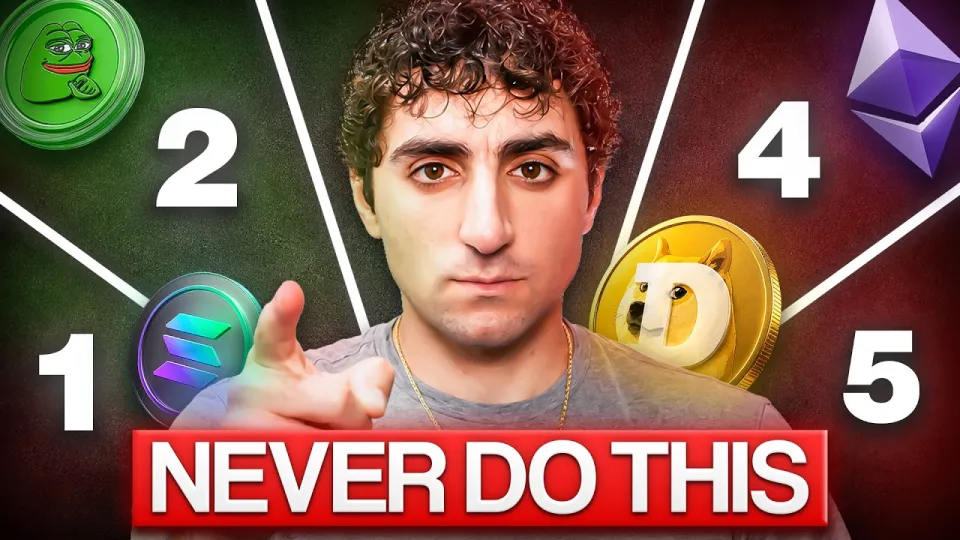
Video: 5 Things I Wish I Knew Before Trading Memecoins (Learn From My Mistakes)
You can order the same kind of articles for your own video to boost it on YouTube and Google. Just message the Telegram bot @sat_sit_bot. Articles with your video embedded are written and posted by the bot itself — on popular topical sites (no ads). Free trial — 50 articles.
· based on the channel rasmr
Meme coin trading is mostly a patience and risk-management game, not a prediction game. The tokens themselves carry no cash flow, so what you actually trade is liquidity, attention and your own discipline. Most people who lose money on meme coins do not lose it because they picked the wrong ticker, but because they sized the position wrong, bought a green candle and had no plan for getting out. If you want a place to practise with a social feed attached, you can start through the FOMO registration link shared by rasmr.
What is a meme coin and why does it behave so differently from other crypto?
A meme coin is a token whose value rests almost entirely on community attention and liquidity rather than on revenue, users or a product roadmap. That single fact explains its behaviour: with no earnings to anchor a valuation, price moves on narratives, influencer mentions and the order book. Liquidity is often thin, so a modest sell order can move the chart several percent, and the same is true in reverse on the way up.
This is why the usual tools behave oddly. A token can look cheap and keep falling for weeks because attention has moved elsewhere. It can also double in an hour on a single post and give it all back by the next morning. Treat a meme coin as a bet on a crowd's mood, sized accordingly, and the rest of the decisions get easier.
What are the mistakes beginners repeat most often with meme coins?
The recurring losses in this niche come from a short list of habits, and almost every beginner hits at least three of them. rasmr built a whole video around five of these lessons precisely because they are so common.
- Trading because you are bored. Sitting in cash feels like doing nothing, so people open positions to feel active. This is the single most expensive habit in the niche.
- Buying the green candle. Entering after a 40% move means you are the exit liquidity for someone who bought consolidation.
- Oversizing one position. A token you cannot afford to lose 80% on should not be 50% of your portfolio.
- Having no exit plan. If you did not decide your take-profit and invalidation levels before entering, you will decide them emotionally later.
- Copying calls without context. Someone else's entry price, size and time horizon are not yours, and by the time a call is public the move is often partly priced in.
How do you decide when to buy a meme coin?
The most common question from newer traders is whether to buy during consolidation or wait for confirmation such as good news. The practical answer is that consolidation is where risk is defined and news is where risk is highest. Buying a quiet range lets you place a tight invalidation level just below the range low, so your loss is small and known. Buying a news spike means your stop has to sit far away, and slippage on thin liquidity can take you out at a worse price than planned.
A workable sequence looks like this:
- Wait for a token to hold a range for a meaningful period instead of chasing the first impulse.
- Define the level that would prove you wrong, and size the position so that level costs you a small fixed percentage of the portfolio.
- Scale in rather than entering all at once, because liquidity in meme coins rarely fills a large order at one price.
- Only add on confirmation, and accept that you will sometimes miss the first leg. Missing a move costs nothing; chasing one costs capital.
Why is patience the real edge in meme coin trading?
Patience outperforms cleverness because meme coins spend most of their time doing nothing useful and a small share of the time moving violently. Traders who feel compelled to act every day pay fees, slippage and spread continuously, and they end up holding random exposure when the actual opportunity arrives. Waiting in cash is a position, and often the best one available.
The pattern shows up clearly in how people describe their own losses: many say they gave back an entire portfolio during a quiet, directionless market simply because they were bored. That is not a market failure, it is a discipline failure. Set rules for how many positions you may hold at once and how often you may open a new one, and the boredom problem mostly solves itself.
How should you manage risk and exits on a token with no fundamentals?
Risk management on meme coins is mechanical, because there is no valuation to fall back on. Decide before entry what percentage of the position you take off at the first target, what you do if the token doubles, and what invalidates the whole idea. Writing those three numbers down turns a chaotic chart into a checklist.
Position sizing deserves the most attention. If a token can realistically drop 70–90% and never recover, then any allocation you would feel forced to sell in a panic is too large. Many experienced traders cap speculative allocations to a small slice of the portfolio and treat the rest as untouchable. Also account for costs: on thin books, the spread and slippage can quietly eat a double-digit share of a small trade.
What do newer traders usually get wrong about their first month?
A first month in meme coins is usually a tuition period, and the useful goal is to make the tuition cheap. Beginners typically overestimate how much they can learn from watching charts and underestimate how much they learn from reviewing their own trades. Keeping a simple log of entry, exit, reason and emotion reveals patterns within a few weeks.
The second common error is treating one good trade as proof of skill. Meme coins produce lottery-like outcomes, and a single 5x says more about the market's variance than about the trader. Judge yourself on process: did you follow your size rule, did you wait for your setup, did you take profit where you said you would. That is the standard rasmr applies in his breakdowns, and it is a far more useful scorecard than a single profit number.
What is the takeaway for anyone starting with meme coins?
Meme coin trading rewards patience, defined risk and honest self-review far more than it rewards speed or conviction. The five lessons in rasmr's video all point the same way: do not trade out of boredom, do not chase green candles, size positions so a full loss is survivable, decide exits before entry, and treat other people's calls as context rather than instructions. The channel rasmr is worth following for this kind of grounded, mistake-first teaching, because it focuses on process instead of hype.
If you want to put these rules into practice, you can open an account through the FOMO sign-up link from rasmr and start with small size while you build the habits.
Key takeaways
- Meme coins are sentiment-driven tokens with no cash flow, so price is set by liquidity and attention, not fundamentals.
- Most beginner losses come from trading out of boredom rather than from a bad token pick.
- Buying during consolidation beats chasing a green candle; confirmation matters more than speed.
- Position sizing and a written exit plan are the only real risk controls in a market with no earnings reports.
- Platforms like FOMO bundle trading and social feeds, which makes over-trading easier, not safer.
Questions & answers
Is meme coin trading just gambling?
It has gambling-like variance, but the difference is process. With fixed position sizing, predefined invalidation levels and a written exit plan, a trader can survive long losing streaks that would wipe out an undisciplined account. Without those rules, it is effectively gambling with extra steps.
Should I buy during consolidation or wait for news confirmation?
Consolidation usually offers better risk, because you can place a tight invalidation level below the range and keep the loss small. News-driven entries force a wider stop and expose you to slippage on thin liquidity. Many traders scale in on consolidation and only add on confirmation.
How much of my portfolio should go into one meme coin?
Only an amount you could lose almost entirely without changing your financial situation. Because these tokens can drop 70–90% and never recover, most experienced traders keep speculative allocation to a small slice and treat the rest of the portfolio as separate.
Why do so many traders lose money even when they pick good tokens?
Timing and sizing usually do the damage, not the pick. Buying after a large move, oversizing, and opening trades out of boredom lead to exits at the worst moment. A disciplined trader with a mediocre pick often outperforms a careless trader with a great one.
Source: 5 Things I Wish I Knew Before Trading Memecoins (Learn From My Mistakes) · Markdown version